
Could a Secondary Suite Help You Qualify for a Mortgage in Ottawa?
For many Ottawa homebuyers, the biggest obstacle isn’t finding a home they like. It’s qualifying for the mortgage needed to buy it. That’s one reason homes with basement apartments and other additional dwelling units can be worth a closer look. Rental income may help with your monthly mortgage payments, but in some cases, it can also help you qualify for the mortgage in the first place. That can make a home with a secondary suite particularly interesting for first-time buyers trying to stretch their purchasing power.
Ottawa is making room for more secondary units
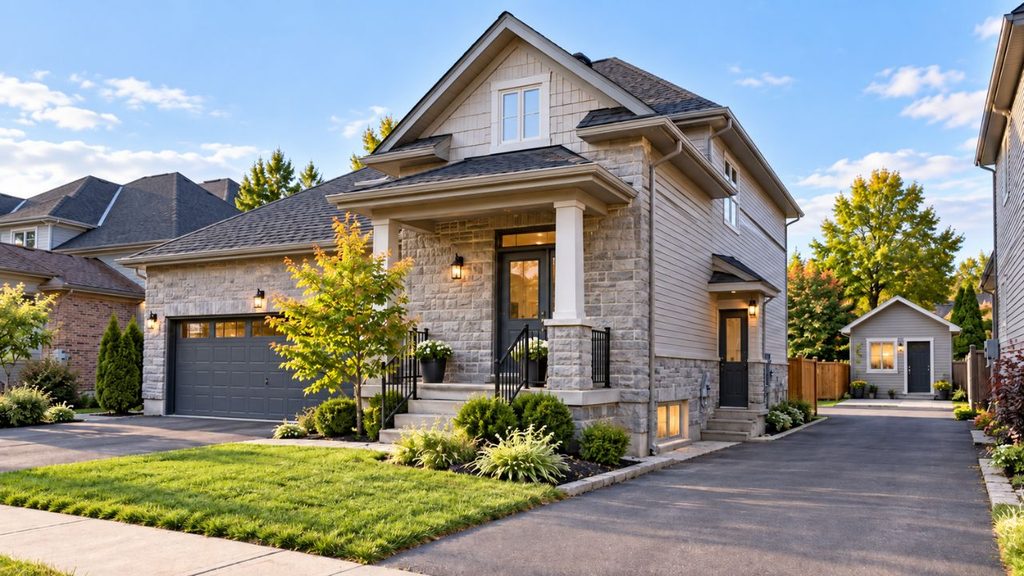
The City of Ottawa refers to these properties as additional dwelling units. Depending on the property and zoning, additional units can potentially be incorporated into detached, linked-detached, semi-detached, duplex and townhouse properties.
In some circumstances, a property can have up to two additional dwelling units, either both within the main home or one within the home and another in a coach house.That doesn’t mean you can pick any house in Barrhaven, Kanata, Orléans or Nepean and start framing a basement apartment next weekend. Zoning, building permits, servicing and Ontario Building Code requirements still apply.
But for homebuyers, it creates an interesting question: could buying a home with an existing rental unit—or one with the potential for a unit—make homeownership more affordable?
Rental income can help you qualify
Under CMHC’s mortgage-insurance guidelines, rental income can be included when calculating how much mortgage a borrower can afford. For an owner-occupied two-unit property that is the subject of the mortgage application, CMHC can consider up to 100% of the gross rental income from the secondary unit.
So imagine you’re buying a house in Ottawa with a basement apartment that could reasonably rent for $1,800 per month. That doesn’t necessarily mean we simply add $21,600 to your salary and call it a day. Mortgage qualification calculations are more complicated than that. But that rental income could potentially improve the numbers enough to make a meaningful difference to what you can qualify for.
Not every lender treats rental income the same way

CMHC provides guidelines for insured mortgages, but lenders can have their own policies for how rental income is calculated and what documentation they require. The treatment can also vary depending on whether there’s an existing tenant, a signed lease or you’re relying on projected market rent.
The property itself matters, too. A lender may want confirmation that the additional unit is acceptable for mortgage purposes, and an appraiser may be asked to provide an opinion of market rent. That’s why I’d rather look at the property and financing together instead of having you buy a house based on the assumption that “$1,800 of rent means I qualify for $1,800 more income.” Mortgage math rarely rewards shortcuts.
What if the home doesn’t have a suite yet?
There’s another possibility. You might find an Ottawa home with a basement or other space that could potentially be converted into an additional dwelling unit. The City requires a building permit when adding an apartment, and the project has to meet applicable zoning and Ontario Building Code requirements.
There are also mortgage programs that may help homeowners finance the creation of additional rental units. Depending on the situation, that can open up possibilities for someone who already owns a suitable home but doesn’t have $75,000 sitting around waiting to become drywall, plumbing and a second kitchen.
Look at the numbers before you buy

A secondary suite isn’t automatically a good investment, and projected rent shouldn’t be the only reason you choose one house over another. You still need to consider renovation costs, permits, property taxes, insurance, utilities, maintenance and the realities of becoming a landlord. Rental income is also taxable income. But if you’re trying to buy your first home in Ottawa, a secondary suite can be worth investigating before deciding a particular property is outside your budget. The important part is doing the mortgage calculations before making an offer.
If you’re considering an Ottawa home with a basement apartment, coach house or potential secondary suite, I can look at the property, your income and the expected rent and show you how different lenders may treat that rental income. Sometimes the house you can afford isn’t just about what you earn. It’s about understanding all the income the property can generate. Contact me to get more information.