
Just when Canadians were starting to enjoy the idea that interest rates might finally become boring again, gasoline prices wandered back into the room and knocked over the furniture.
The Bank of Canada held its policy rate at 2.25% on September 2, but its latest discussions show that policymakers are becoming more concerned about persistently high gasoline and diesel prices. If those higher energy costs start spreading into the price of other goods and services, the Bank has warned that it may eventually need to respond with higher interest rates.
In other words, rate hikes are back in the conversation. That doesn’t mean the Bank is reaching for the big red “raise rates” button just yet, but Ottawa homeowners, buyers and anyone with a mortgage renewal coming up probably shouldn’t assume the next move will automatically be down.
The Bank isn’t just worried about your gas receipt

Headline inflation has been running near 3%, which is close to the top of the Bank of Canada’s 1% to 3% target range, and gasoline has been a big part of that. The more reassuring part is that inflation excluding gasoline has been closer to 2.2%, while the Bank’s measures of underlying inflation have remained around 2%.
So far, expensive fuel hasn’t completely escaped the gas station and started running around the economy unsupervised. That’s what the Bank is watching for, because fuel affects far more than your commute.
Trucks move groceries into Ottawa. Contractors drive between job sites in Barrhaven, Kanata, Stittsville and Orléans. Building materials need to be transported. Businesses pay to move products around the region and across the country.
If those costs stay high long enough, companies can start passing them along to consumers. Suddenly, your expensive tank of gas has invited groceries, renovations and building materials to the inflation party.
Ottawa households could feel this in more than one place
For Ottawa households, higher energy prices can show up in several parts of the monthly budget at the same time. There is the obvious extra cost at the gas station, but transportation costs can also work their way into food, deliveries, travel, construction and other goods and services.
That matters in a housing market where many buyers are already doing some careful arithmetic to make a purchase work. An extra few hundred dollars spread across groceries, transportation and other expenses may not sound dramatic on its own, but mortgage qualification tends to be less impressed by our ability to say, “We’ll figure it out.”
And if higher energy costs eventually lead to broader inflation, mortgage rates could become part of the problem too.
Is the Bank of Canada about to raise rates?
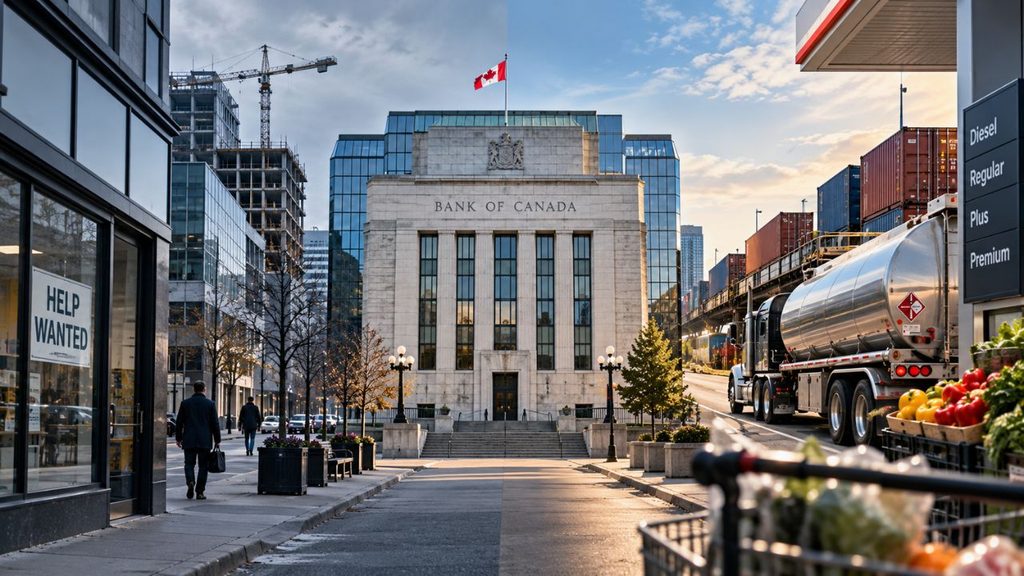
Probably not immediately. Canada’s economy is still showing signs of weakness, and the Bank has pointed to excess supply in the economy, a softer labour market and ongoing uncertainty surrounding U.S. tariffs and global trade. Those forces could slow economic growth and reduce inflationary pressure.
That leaves the Bank in an awkward position. Raise rates too soon, and it risks putting additional pressure on an already soft economy. Wait too long, and higher energy costs could start feeding into broader inflation.
Capital Economics argued on September 17 that the Bank is likely to “drag its feet a bit longer on hikes.” In other words, the risk of higher rates has increased, but that doesn’t mean a hike is imminent.
The next Bank of Canada rate announcement is scheduled for October 28, along with a new Monetary Policy Report.
What does this mean for Ottawa mortgage borrowers?
The biggest takeaway isn’t that rates are definitely going up. It’s that the direction of rates has become less predictable.
Variable mortgage rates respond directly to changes in the Bank of Canada’s policy rate. Fixed mortgage rates work differently because they’re influenced much more by Government of Canada bond yields, which can move before the Bank changes anything.
If you’re buying a home in Ottawa, renewing a mortgage or considering a refinance in the next few months, I wouldn’t build your plan around the assumption that rates will definitely be lower later. Hope is wonderful. It is slightly less useful in a mortgage qualification.Instead, look at the options available today, compare fixed and variable choices carefully, and make sure the payment works comfortably even if rates don’t cooperate.
For the last few years, Canadians kept asking, “When is the Bank going to cut again?” We may now be entering a period where the better question is, “How long can the Bank sit still before inflation makes it move?” Contact me for more.